Tuesday, 16 August 2011

Steppe On


Remember Rob Lilwall? He is one of my favourite Less Ordinary Lives, a young man who jacked it all in to cycle 30,000 miles from Siberia back home to England (he went the long way round).

Well, he's off again – this time to walk a mere 3,500 km from Ulan Bator in Mongolia to Hong Kong, where he now lives. The trek will take him and his companion through the Gobi desert, along the Great Wall, down the gorges of the Yellow River and across the mountains of central China. He leaves in November.


Part of the joy of Lilwall's original expedition was his amateur under-preparedness – £10 Royal Mail waterproofs, a pup tent and no fixed route – and an absence of the trappings of modern-day expeditions: camera crew, sponsorship and a book deal.

This trip is slightly different. He is hoping to raise money for children's charity, Viva, for which he and his wife have set up the Hong Kong fundraising office. National Geographic is making a documentary of his journey (his companion is a young cameraman, Leon McCarron). Even Bear Grylls, who I dismissed in my original post, has provided a quote for the pair's trip website (you can follow their progress here).

Does it matter? You can only cash-in your life savings and take three years off to cycle the world once, as Lilwall did. And anyone who has managed to combine being an "adventurer" with running an outpost for a children's charity has to be deeply admired.

For now, Lilwall is getting fit, planning his route and improving his Mandarin. Sadly, those £10 over-trousers probably won't make the kit list.

Saturday, 23 July 2011

Big Hack

Barely a day passes these days without Nick Davies’s picture byline on the front of The Guardian. He is the investigative journalist behind the story of the moment: phone hacking, Murdoch and the News of the World.

Davies is journalist as rock star – handsome, charming, and confident bordering on arrogant. He has been called "courageous", "heroic" and "the British Bernstein and Woodward to Murdoch's Nixon" (he was apparently inspired into his line of work by the Watergate scandal, filmed as All The President's Men with Dustin Hoffman and Robert Redford). Oh, and "pompous", according to Private Eye editor, Ian Hislop.
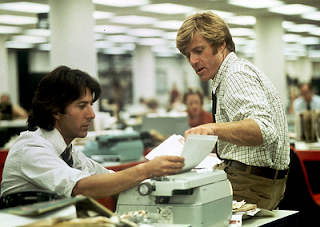

Last year, I attended a talk Davies gave with The Guardian’s other super sleuth, David Leigh. The two could not be more different. Leigh cuts a scruffy geography teacher figure. He stood at the podium and spoke quietly and humbly about his work, his methods, the stories he is most proud of.

Davies, in black jeans, leather jacket and a headset, paced the stage like a tiger, regaling the packed hall with tales. To his credit, he tried to convey the unglamorous side of his business – the endless chipping away at a story, the lonely days away from home, the slow pace of events. But his energy made it sound impossibly exciting. After the talk, in the bar, he was surrounded by female admirers.

The masterclass was off the record. But it's not too controversial to say Davies talked about his early days as a reporter in South Devon, recently graduated from Oxford. A seasoned photographer accompanied him on his first “doorstepping” – visiting a young widow to talk to her about her husband’s death at work in suspicious circumstances.

“What are you going to say?” asked the old-time hack. “I’ll tell her I’m investigating her husband’s death,” replied Davies, brimming with confidence. “She’ll shut the door in your face," the old hack said. "Tell her you're writing an appreciation of her husband, and she'll invite you in for tea." It was Davies's first lesson in the art of investigation.

How does he decide what stories to investigate? Anything that makes you think, hang on, something doesn't add up here, he told us.

Phone tapping at NoW is just the first in a long line of impressive scoops. He uncovered the story on nurse Beverly Allitt, has investigated education, drug policy and penal reform. And he spotted the potential in Wikileaks before anyone else. Unsurprisingly, he has a book deal from the Murdoch story, it was reported yesterday.

Guardian editor, Alan Rusbridger, says Davies never gives up. "Although he's in his mid to late 50s now, he's still got an amazing appetite for standing on doorsteps, for getting out and meeting people, and spending long evenings in seedy bars or whatever it takes to get the story," he told Radio 4 last week.

"He is a troublemaker, and quite often when he comes into the office, your heart sinks because you know there's going to be trouble. That happened when he came in and said, 'I've just met Julian Assange and he's got the biggest cache of secrets the world has ever seen.' Part of you thinks, that's fantastic, and part of you thinks, oh God, how are we going to deal with that one?"

Daily Telegraph political journalist Peter Oborne has said: "He's uncomfortable to be with, there's no ease when you're with him, you make a joke and he tends not to get it. But I have no doubt that he's the greatest living British journalist."

In a way, Davies is why almost anyone becomes a journalist: he uncovers the truth, and his stories change things. Right now, the press, police and politicians are changing how they do business with each other. I can't say many of my stories have achieved that.
Thursday, 16 June 2011

Rainforestman


Dr John Hemming – explorer, writer, gentleman – seems a little out of place in 2011. His world is one of Amazon expeditions, museums and relics; Oxford college days and received pronunciation.

Ancient artefacts line the walls of his elegant Kensington townhouse: pots and figurines that look very breakable. Most are from Peru, he says, some thousands of years old, bought at auction in London. I'm here to interview him for Friends of the Earth's 40th anniversary, which it celebrates this year. Hemming is a supporter of the charity and my first subject – one down, 39 to go.

He first visited the Amazon in 1961, aged 25, with friends Kit Lambert and Richard Mason. They had set out to survey the Iriri, then believed to be the world's longest unexplored river. "The Brazilian government authorised us to name places, so we named all the landmarks after our Brazilian girlfriends," he says.

The young trio – plus three Brazilian government surveyors and five local woodsmen – spent four months mapping, cutting trails into the unknown, discovering the river and building dugout canoes when disaster struck. Mason was ambushed by a long range hunting party of, at that time, uncontacted PanarĂ¡ tribesmen ('uncontacted' refers to tribes who have had no peaceful contact with mainstream society).

When Hemming and Lambert found his body, left on their trail, it was surrounded by 40 arrows and 17 clubs, his head smashed by the latter. Two arrows sit in a basket in Hemming's downstairs loo – with long bamboo stems and pointed tips, they are not much shorter than me.

"It was incredibly bad luck, they were the most belligerent tribe in Brazil," he says. "They had the same word for stranger and enemy – anyone who wasn't one of them. Richard was the first to walk into the ambush – it could have been any one of us." The tribe was contacted 12 years later.

The photograph above was taken a few days after first contact was made with another tribe, the Asurini. It took three years of work and several tough expeditions, he says, undertaken by Brazil's National Indian Foundation. "Meeting these indigenous people was the greatest day of my life," he says. "And she even invited me to sit in her hammock with her."

Nowadays, the thinking on uncontacted tribes is somewhat different. According to charity Survival International (of which Hemming is a founder), tribes must be left alone, and effort put into protecting them. Minimal contact, such as this extraordinary, moving video, is sometimes necessary to check whether tribes have moved elsewhere, whether their lands are being invaded, and to draw attention to their existence.

In the 50 years since his first trip, Hemming has travelled the entire Amazon region, documenting it in several books, including The Conquest of the Incas and, most recently, Tree of Rivers: The Story of the Amazon. He has visited and lived with over 40 tribes, four of them at the time of first contact.

He now enjoys the comfortable existence of a retired explorer – "I am too old for really tough exploring" – but is still active in south America. He is off next week to Brazil for a conference of Amazonian anthroplogists, and is chairman of a new charity there that is creating a research station in an undisturbed tropical rainforest.

His passion for the welfare of the Amazon rainforest remains undimmed. "It gives the world three things," he says. "It absorbs our carbon. It provides rain for much of Brazil and Argentina, even parts of the Caribbean. And it has the richest biodiversity on earth. We still haven’t documented everything. Protecting it is actually protecting humanity."

Thursday, 26 May 2011

The wisdom of Michelle O

Dressed in a white tunic, black pants and a major gold belt – together with her black eye-liner, looking just a little bit 60s – Michelle Obama offered some career and relationship wisdom to a group of schoolgirls from inner city London (just up the road from here) who were visiting Oxford University. Who wouldn't want this wonderful woman on speed dial for all of life's crises?

“People sometimes questioned whether someone with my background could succeed at an elite university. And when I was accepted at one of those universities, I had all kinds of worries and fears and doubts. I worried that I wouldn’t be as well prepared as students who had come from more privileged families; I worried that I wouldn’t fit it somewhere so different from where I’d grown up.

"But after a few months, in college away from home on my own I realised that I was just as capable, and I just as much to offer [as] any of my classmates. I realised that if I worked hard enough I could do just as well as anyone else. I realised that success is not about the background you’re from, it’s about the confidence that you have, and the effort you’re willing to invest. You just have to work hard, that’s it. You have to push yourself. That’s the only thing. This doesn’t come easy.”

And on her husband, she said:

“I knew he was a special person. And it had nothing to do with his education, it had nothing to do with his potential. There are a lot of women who [to tick] the boxes – did he go to the right school? What is his income? It was none of that. It was how he felt about his mother. The love that he felt for his mother. His relationship to women. His work ethic.

"We worked together in a firm. He did his work, and he was good. And he was smart. And I liked that. And he was low key, and he wasn’t impressed with himself. And he was funny. And we joked a lot. And he loved his little sister.

"And he was a community organiser. I really respected that. Here we are in a big law firm, right, and everybody was pushing to make money. He was one of the smartest students at Harvard Law School, one of the smartest associates in our firm. He had the chance to clerk for the Supreme Court. And I thought – well, you’re definitely gonna do that, right? Only a few people have the chance to do that.

"And he was like, nah, not really. I think I can do more work working with folks in churches. And I was like, whoa, that’s different. And he meant it. It wasn’t a line, he wasn’t trying to impress me. It was those kind of values that made me think, you don’t meet people like that often. And when you couple that with talent and, he’s cute... You know, I always thought he would ... be useful [she laughs].

"But I had no idea he would be President. I didn’t think he was going to be President until the night we were standing on the stage and he actually won, you know. I was like, God, whoa, you won.

"The lesson for women is reach for partners that make you better. Trust your instincts. Good relationships feel good. They feel right. They aren’t painful. Do not bring people into your life who weigh you down.”

Thursday, 12 May 2011

Himalayan porters

One of the more unsettling sights you see while trekking in Nepal's Khumbu Valley is the steady stream of porters carrying extraordinary loads on their backs. There are no roads, and no transport other than yak – small planes land at airstrips lower down the valley, but higher up, they're strictly for emergencies only. So these human white vans keep the trekking lodges, the local markets and the wealthy teams at Base Camp supplied with food, drink, construction materials and other essentials.

The porters – small, wiry and weathered – have straps across their heads to take some of the weight off their backs, and small wooden walking sticks that double as bottom rests. Bent almost double, they trudge past, one tiny step at a time.

We saw mountains of toilet roll, sheets of plywood, crates of beer, roll matting, plastic basins, lemon drink, kerosene, enormous wooden planks as large as a crucifix, plumbing pipes 12 feet long and, once, a generator. Most wear flimsy plimsolls or sandals. One person had bare feet. The terrain is rough, the altitude punishing, and the mountainsides steep.

But the larger the loads, the better the pay. So it makes sense to carry as much as you can, goes the logic.
Some loads are more lucrative than others. These blue plastic barrels are toilets headed for Base Camp. Lined with a plastic bag, topped with a Western seat and placed inside a tarpaulin, they make for a surprisingly pleasant loo-going experience, considering.

A porter carrying a full barrel of poo will earn 150 rupees (about £1.20) per kg. At 60kg per barrel, that's 9,000 rupees – a good wage in Nepal. Any porter lucky enough to get the gig overseeing the transportation of an entire Everest expedition's excrement for three months can earn $2,500.

Struggling with my own meagre backpack, these porters seemed superhuman – and medieval. But they brought the Everest experience into sharp relief. For every rugged, moneyed mountain climber seeking glory on the summit, there's a porter who has to has to carry their shit back down the mountain. And there's very little glamour in that.

Wednesday, 11 May 2011

Monks

These Buddhist monks live in a monastery in Tengboche, Nepal – a tiny settlement on top of a ridge with breathtaking views of Everest and Ama Dablam (the large lump in the background, below). Even they appreciate the outlook: I spotted one peering up the valley through his binoculars, although he could have been birdwatching.

The monastery, or gompa, is richly decorated. Tourists are allowed inside the main hall, or lha-khang, twice a day to watch the monks chanting. Silk banners hang from the ceiling, the walls are ornate and colourful, and a large, bright Buddha oversees proceedings.

Early morning and evening the monks, who have dedicated their lives to the monastery, take roost like chickens on two sets of benches, facing one another. Some are little more than teenagers. They wrap themselves in fleece-lined capes to keep warm and start to chant.

The sound is a low drone with mumbled articulations, that lasts around five minutes before coming to an abrupt halt. This is followed by tea sipping, poured from a flask by a monk, slurping, yawning, ear-picking and glancing around the room at the tourists. Then the chanting begins again.

Tengboche was one of my favourite places in the Himalayas, perhaps because it's reached from either side by a very steep climb. Or perhaps because of its very good bakery. But perhaps it was the monks, who showed me the true meaning of dedication.

Sonam Sherpa


Lhakpa Sonam Sherpa lives in Namche Bazaar, a small, horseshoe-shaped town perched on a mountain high up in Nepal's Khumbu Valley, where the air is thin. Crows caw-caw loudly, yaks stroll through the streets, and the chink-chink-chink of hammer on stone is a constant soundtrack.

Namche is a popular stop-off for trekkers to acclimatise before pushing up the valley to Everest Base Camp, and beyond. We spent three days there breathing the sharp air and eating apple pie.

Unfortunately, I didn't take a digital picture of Namche, but this is the view up the valley from a short, steep path above town. That's the peak of Everest (behind a cloud).


Sonam is a historian of Sherpa culture and an excellent photographer. He is slight, with expressive eyes and a high-pitched, schoolboy giggle. With his wife, he runs a lodge for trekkers with two rudimentary museums attached: one documenting Sherpa culture, the other a history of climbing Mt Everest.


This is him as a beautiful 16-year-old boy.


And this is his matinee idol-handsome father, Sonam Girmi Sherpa, who undertook 37 expeditions to Everest during his lifetime.


When he was 19, Sonam junior contracted meningitis while making his way on foot, and by truck, to Kathmandu to embark on an engineering course at university. He woke up in hospital, deaf. He was sent to the best ear specialists in the US and London, but no-one could do anything for him.

The event changed the course of his life. He decided he had to do something his disability would allow. And he felt a deep desire to document the fast-changing lifestyle of his people, the Sherpa (the name given to people who live in this region of Nepal).

Communicating with a profoundly deaf man whose first language isn't English – although it is very good – is a challenge. But we managed through lip-reading (him), hand gestures (me) and scribbling on a pad (both of us).

"Where did you take this photo?" I asked. "OFF TRACK. ALMOST NO TOURIST" was the written reply, delivered with a wide smile and a twinkle in his eye.